
Self-Sustaining Electric Crop Harvester with Innovative Stubble Handling
An electric harvester that burns crop stubble in a filtered closed chamber and converts the heat into drive power through thermoelectric generators — no stubble left on the field.
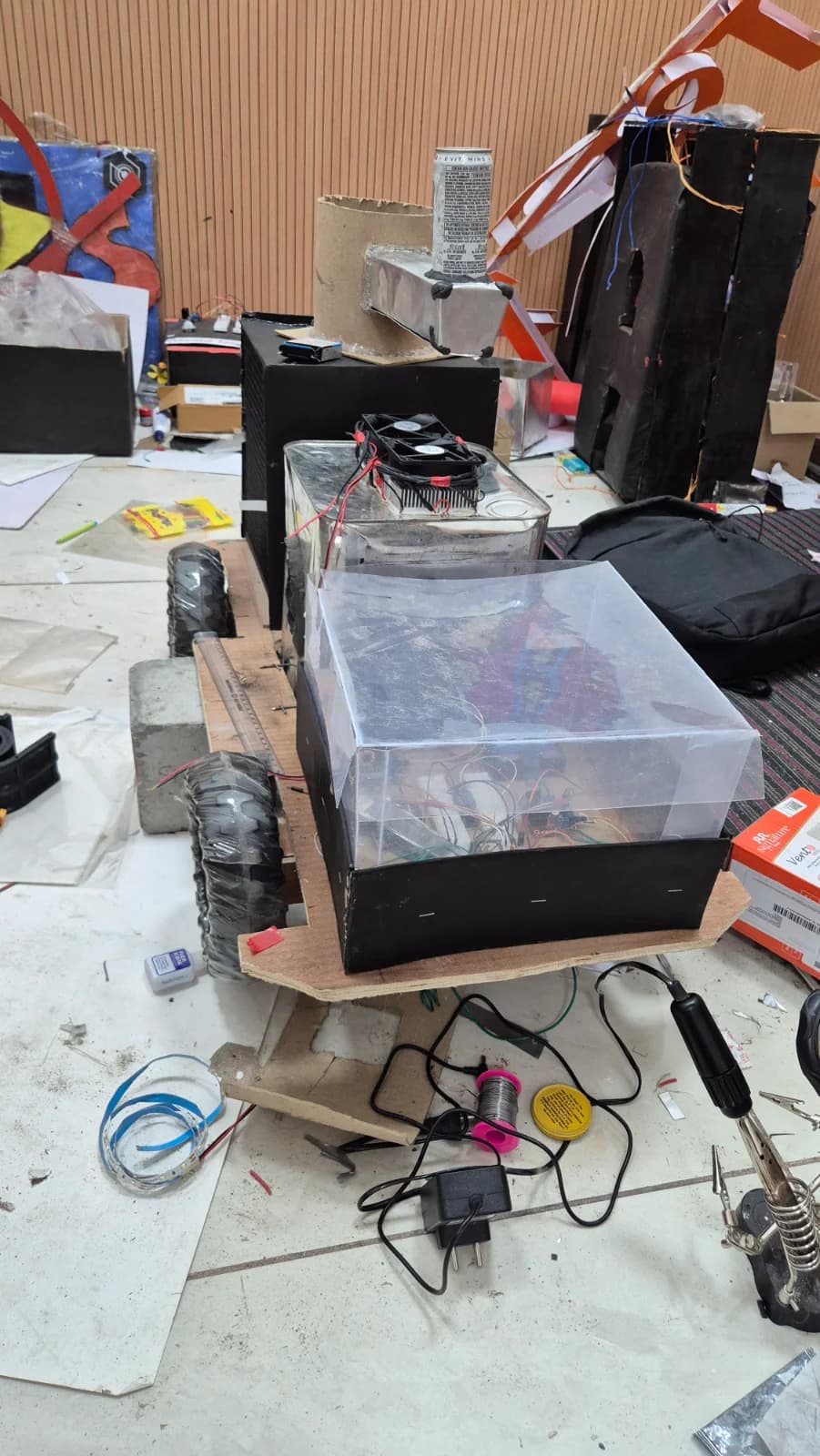
Abstract
This project introduces an innovative self-sustaining electrical agriculture vehicle designed to address the critical environmental challenge of stubble burning. Every year, farmers burn crop residue to clear fields for new sowing — a practice that triggers a severe smog crisis in urban centres like Delhi, driven by the logistical cost of transporting bulky waste. The proposed solution integrates harvesting and waste management into a single, mobile platform.
During harvesting, crop residue is fed into an internal combustion chamber where Thermoelectric Generator (TEG) modules convert the generated heat directly into electricity that drives the harvester itself. To ensure environmental safety, a specialized exhaust chamber equipped with HEPA and activated-carbon filters removes smoke and toxic gases before atmospheric release, and the collected soot is repurposed to manufacture ink — adding a secondary value stream. With an average temperature difference of around 152 °C across the TEG cells during operation, each cell contributes roughly 4.2 W; combined with battery storage and solar support, the recovered energy meaningfully offsets the harvester's power requirement.
By transforming a waste product into a primary power source, the technology offers a clean, green, and instantaneous alternative to traditional stubble handling — leaving no stubble on the field while existing approaches (Happy Seeders, bio-decomposers, or collection for power plants) remain slow, logistics-heavy, or partial.